 Email: [email protected]
 Tel: +86-512-63221899
- Flame Retardant Fabric Manufacturers and Suppliers
Email: [email protected]Tel: +86-512-63221899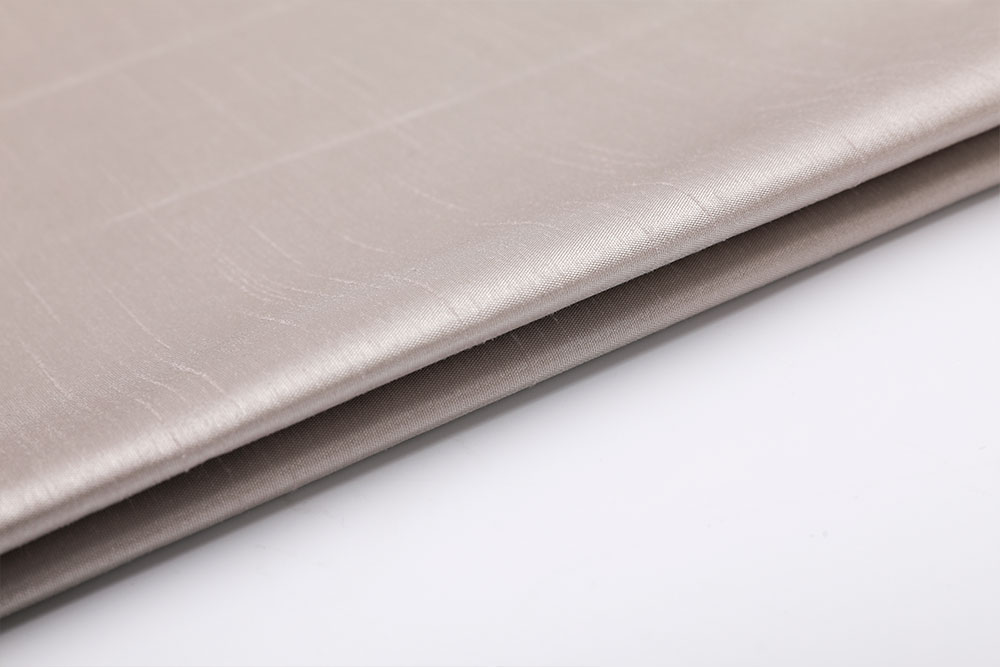


Kylin’s fire retardant curtain fabric is designed for use in hotels, nursing homes, hospitals, and schools where fire safety is essential. Treated with a flame-retardant coating, the fabric meets NFPA 701 standards and helps slow the spread of fire.
While the fabric also provides light-blocking capabilities, its primary advantage lies in its fire-retardant treatment. Available in 3-pass or 4-pass options, the coating ensures effective flame resistance, though it is not washable and may emit toxic fumes if burned.
Kylin’s fire retardant curtain fabric offers a balanced combination of safety, performance, and functionality for spaces that demand strict fire compliance.

Suzhou Kylin Textile Technology Co., Ltd. Has rich production experience, advanced technology and production equipment. We are located in the textile industry-developed area of Shengze Town, Wujiang District, Suzhou city. OEM/ODM Fire Retardant Curtain Fabric Manufacturers and Wholesale Fire Retardant Curtain Fabric Factory in China. Our company has a wide product range that includes flame retardant home textile fabric, flame retardant curtain fabric, ready-made FR curtain, FR fabric air duct, FR treated fabric, FR coated fabric, non-FR garment fabric, and so on. We’re still trying to develop more different flame-retardant fabrics for different industries. And so many kinds of our FR fabric have been sold out all over the world. Welcome to contact us!
If you source fabric for the U.S. market, you have probably encountered the Flammable Fabrics Act. It is not the kind of regulation that makes headlines every day, but it shapes what can legally be s...
2026-10-10Every few weeks a sample comes back to our cutting table with the same story. The velvet is soft, the colour is right, the upholsterer loves the hand feel, and then the Crib 5 report lands and an ent...
2026-09-28If you buy fabric for hotels, hospitals, schools, theatres or transport interiors, you have almost certainly met the term "contract fabric". It is not a fibre and it is not a weave; it is a market de...
2026-09-21We make both kinds of flame retardant blackout fabric, so the choice comes down to what the room needs. Our fire retardant coated blackout curtain fabric receives three or four coating passes with a black layer in the middle, which gives the highest blackout levels. It is the reference for rooms that must be fully dark, such as our 3-pass coated blackout fabric listed at 100% light blocking, and it adds thermal insulation and sound reduction in models such as the thermal insulated and noise reducing coated blackout fabric.
Our inherently flame retardant blackout curtain fabric is woven from 99.99% IFR polyester yarn with black yarn through the middle, so the light blocking and the flame retardancy are both part of the cloth. It has the soft hand and natural drape of an ordinary curtain, which makes it the natural choice for hotels, hospitals and other spaces where curtains are laundered regularly.
Choose coated fabric when total darkness comes first and IFR when frequent cleaning and drape come first. Some projects use both, with a coated blackout lining behind an IFR face fabric, and the finished combination is best fire tested as a whole.
The number of passes counts the coating layers on the fabric. A 3-pass construction has a base fabric, a middle black coating that blocks the light and a smooth finishing layer, and it is enough for most hotel rooms, offices and schools. A 4-pass construction adds another coating layer, which improves light blocking, reduces heat transfer and gives a softer feel and better drape. It makes sense where light control, insulation and appearance all matter at once, and both options are available.
The right model follows the application. Our triple coated FR blackout fabric for hotel curtains suits guest rooms, the opaque coated FR blackout fabric for theaters and hospitals suits spaces that need full opacity, the commercial grade coated blackout fabric for drapery and stage use is built for large hanging areas, and the FR coated roller blind fabric with UV protection is made for blinds.
Approve a hung sample before you approve pleat depth. In real rooms most light leaks in around the edges, so allow overlap at the center and side returns, and ask for light transmittance data for the exact fabric.
Two things decide which fire report a curtain needs: the type of venue and the authority that inspects it. Fire authorities single out buildings where many people gather or sleep, such as hotels, hospitals, nursing homes, theaters and schools, and settling the requirement early avoids ordering a fabric tested to a standard the project never asked for.
In the United States the national reference is NFPA 701, and our coated blackout fabrics are made to meet it. States and cities adopt it with their own rules, so it is worth confirming with the local fire authority. In Europe, EN 13773 classifies curtains and drapes from Class 1, the highest, to Class 5, with Class 1 and 2 most often requested on commercial projects. The United Kingdom typically cites BS 5867-2, usually Type B or C, and German-speaking markets still refer to DIN 4102-B1. Chinese projects normally quote a class under GB 8624, such as B1. In Japan, the Fire Service Act requires curtains in high-rise buildings, theaters, hotels and hospitals to be flame retardant, and buyers look for the flame retardant label.
Tell us the venue and the country before you ask for a price. We will check the requirement against our coated and IFR ranges through our contact page for fire retardant curtain fabric quotations and compliance questions.
Copyright ? Suzhou Kylin Textile Technology Co, Ltd. Rights Reserved.
 Fire Retardant Curtain Fabric Factory Fire Retardant Curtain Fabric Manufacturers




 English
 Español
 日本語
 한국어
 Português


