Why Hotels Are Choosing Linen-Like Over Natural Linen
A 220-room hotel that switches from pure linen to a linen-like polyester curtain specification can eliminate an average of 12 % annual replacement spend caused by shrinkage and fraying. The operational math is straightforward: natural linen brings an undeniably high-end texture, but it also brings a predictable set of commercial liabilities: it shrinks up to 5 % after the first wash, it wrinkles deeply enough to require daily housekeeping attention, and it offers zero inherent flame resistance. Linen-like curtain fabric, engineered from inherently flame-retardant (IFR) polyester yarns, reproduces the irregular slub and dry hand of flax while delivering a fabric built for 24/7 hospitality use. This is not a downgrade; it is a materials specification that removes the biggest cost drivers from hotel drapery programs.
The Aesthetic Allure Without the Maintenance Burden
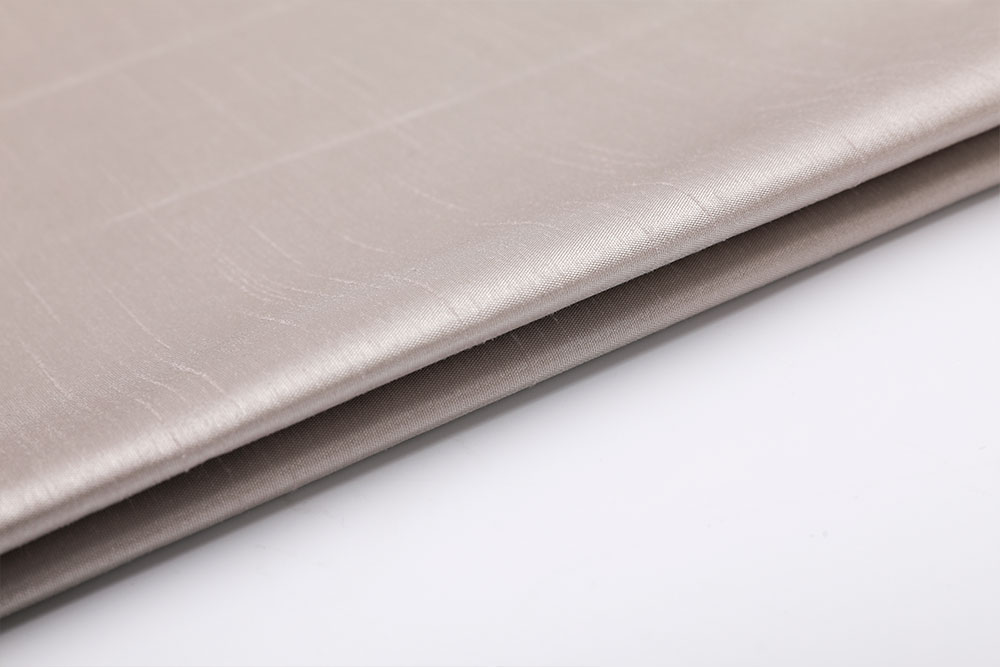
Natural linen’s appeal sits in its crosshatch texture and soft, matte appearance. A high-quality linen-like fabric reproduces these visual markers through spun-polyester construction that mimics thick-and-thin yarn variation. The difference shows up in the property’s operating budget, not on the guest-room window. Where natural linen demands dry cleaning or extremely careful low-temperature laundering to avoid dimensional change, a properly chosen polyester linen-like fabric can undergo commercial laundering at 60 °C without measurable shrinkage. Housekeeping teams gain back hours every week because the fabric resists creasing far more effectively than cellulosic fibers. For hotel groups operating across multiple locations, that consistency translates into a repeatable, documentable standard rather than a case-by-case gamble on how a local laundry will treat natural linen.
Inherent Flame Retardancy – A Non-Negotiable for Hotels
Fire codes such as NFPA 701 in North America and the more stringent BS 5867 in the UK leave no room for untreated fabrics in public-space and guest-room curtains. Natural linen burns easily unless it is back-coated with chemical flame retardants—a treatment that can degrade with repeated washing and that nearly always compromises drape and hand feel. An inherently flame-retardant polyester linen-like fabric, in contrast, carries its FR performance inside the polymer backbone; it cannot be washed out or abraded away. This permanence is critical for hotels that expect a curtain to stay code-compliant across a 5- to 7-year replacement cycle. Specifiers who build their FR specification around IFR polyester eliminate the risk of a post-laundry compliance failure that can trigger a costly, whole-floor curtain replacement.
Review the full construction options in our IFR linen-like curtain fabric product line.
 Custom IFR and anti-mosquito linen-like curtain fabric Suppliers, Factory - SuzhSuzhou Kylin Textile Technology Co., Ltd is China Custom IFR and anti-mosquito linen-like curtain fabric Suppliers and Factory,Details: N...View Product →
Key Performance Features of Hotel-Grade Linen-Like Fabric
Not every fabric described as “linen-look” will survive in a hotel. The three performance pillars that separate a genuine hospitality textile from a retail decorative fabric are mechanical durability, controllable light management, and a maintenance profile that aligns with the hotel’s laundry workflow. Understanding these benchmarks lets a procurement team write a specification that eliminates items destined to fail before the next soft refurbishment.
Durability and Abrasion Resistance
A hotel curtain endures constant handling, bundle laundering, and friction against header systems. Commercial-grade polyester linen-like fabrics typically achieve a Martindale abrasion rating of 30,000 cycles or higher. That figure matters because a curtain that abrades prematurely will show surface fuzzing and a loss of surface texture—exactly the quality that convinced the design team to specify a linen look in the first place. Fiber blend also plays a decisive role; learn how different fiber compositions influence longevity in our article on the durability of linen-like fiber blends. Requesting a manufacturer’s Martindale test report is a practical step every buyer should take before ordering for a multi-room project.
Light Filtration and Blackout Options
Not every space in a hotel needs full blackout, but the specification must be intentional. A standard, uncoated IFR polyester linen-like fabric provides a soft diffusion suitable for corridors, lounges, and meeting rooms where some natural light transmission is desirable. Guest rooms, however, demand hard blackout—typically achieved with a woven, triple-layered construction or a 3-pass acrylic coated backing that eliminates pinhole light leakage. When selecting a blackout-grade product, verify that the coating itself also meets the same FR standard as the face fabric. For a deeper look at the material categories available, read about common types of blackout curtain fabrics. To directly address guest-room light control requirements, a dedicated linen-like blackout curtain fabric with a dense weave and opaque barrier layer provides the measured lux levels that sleep-quality studies demand.
 Custom IFR linen-like blackout curtain fabric Suppliers, Factory - Suzhou Kylin Suzhou Kylin Textile Technology Co., Ltd is China Custom IFR linen-like blackout curtain fabric Suppliers and Factory,Details: Name:IFR l...View Product →
Ease of Maintenance and Stain Resistance
Laundry is the single biggest lifecycle expense for a hotel curtain, often exceeding the fabric’s purchase price within 24 months. Polyester linen-like fabrics accept a durable stain-release finish that allows common soiling—coffee, hand lotion, and airborne dust—to release at lower wash temperatures. More importantly, the dimensional stability of a heat-set polyester means the curtain will not progressively shrink over 50 wash cycles, a guarantee that natural linen simply cannot make. Hotels that adopt a polyester linen-like specification can reliably standardize on a single laundry protocol across all properties. For step-by-step guidance on maintaining performance through cleaning, review the specific linen-like fabric care requirements that preserve both appearance and fire certification.
How to Select the Right Linen-Like Curtain Fabric for Your Property
A disciplined selection process moves beyond texture swatches and into hard documentation. Two criteria—verifiable fire certification and weight-driven drape behavior—will determine whether the fabric performs as expected once installed.
Understanding FR Certifications and Compliance
Ask for the full test report, not just a manufacturer’s statement of compliance. In the United States, the minimum requirement is passing NFPA 701 Method 1 for drapery textiles, but international hotel brands often specify the stricter British Standard BS 5867 Part 2 Type B or the European EN 13773 for curtain and drapery fabrics. An IFR polyester linen-like fabric can meet all three standards simultaneously because the flame resistance is molecular, not a surface coating. When evaluating supplier documentation, check that the test certificate covers the exact fabric weight and construction being quoted, and confirm that the certification is valid after the number of wash cycles the hotel expects in one year. A fabric that loses its FR rating after 10 washes is a liability, not a saving.
Matching Fabric Weight and Drape to the Room’s Function
GSM (grams per square meter) is the simplest proxy for how a curtain will hang. A lightweight 180-200 gsm linen-like fabric works well for a sheer secondary drape or a relaxed café-style window, but it will appear limp on a 3-meter-high ballroom window. For formal public spaces, a weight of 280-350 gsm provides the body needed to hold pinch pleats and to ensure the curtain stack clears the window properly. Guest-room blackout fabrics often fall in the 250-300 gsm range, balancing sufficient coverage with a manageable weight for curtain tracks and motorized systems. Rather than guessing, request a full-width sample at the target GSM, hang it in one room, and observe the drape under the property’s actual lighting conditions before committing to a bulk order.
Conclusion: Making the Informed Choice for Long-Term Value
The specification of a linen-like curtain fabric for a hotel is ultimately a risk management decision. A polyester IFR construction eliminates the three largest operational risks associated with natural linen: shrinkage, unpredictable fire safety degradation, and labor-intensive crease removal. When the specification is backed by auditable Martindale test figures, wash-cycled FR certifications, and a GSM that matches the architecture of the space, the resulting curtain delivers the organic aesthetic that interior designers want with the predictable, low-maintenance performance that owners need. Approached this way, a quality linen-like fabric is not a replica of flax—it is a purpose-designed material that outperforms its natural counterpart on every measurable axis that matters to a hotel’s balance sheet.



 English
 Español
 日本語
 한국어
 Português
 中文简体






 Email: [email protected]
 Tel: +86-512-63221899

