


 English
 Español
 日本語
 한국어
 Português
 中文简体
Industry News
Home / News / Industry News / B1 Flame Retardant Satin Fabric for Theater Seats: 2026 Fire Code Guide
 Email: [email protected]
 Tel: +86-512-63221899
Content
A wave of new grand theaters is opening across China this year, and with each opening comes a harder question for facility planners: what happens to the audience seating in the first ninety seconds of a fire. Upholstery is one of the largest combustible surfaces in an auditorium, packed tightly row after row, which is exactly why building codes single it out for special treatment.
Under the national Code for Fire Protection Design of Buildings and the Code for Design of Theatre Buildings, seat fabric in an audience hall must meet B1-grade flame retardant classification. That requirement sits inside a broader four-tier system defined by China's national standard for classifying the burning behavior of building materials, which separates products into Class A (non-combustible) down through B1, B2, and B3. B1 is the bar for materials used in occupied, high-density spaces — theaters, cinemas, lecture halls — where evacuation time is limited and panic risk is high.
Seat fabric compliance isn't a paperwork formality. It's tested against three specific numeric thresholds, and the margin by which a fabric clears them determines how much real-world safety cushion a venue actually has.
B1 classification for textiles comes down to three lab measurements, each with a pass/fail limit written into the standard.
| Test metric | B1 national limit | Tested result |
|---|---|---|
| Limiting oxygen index | ≥ 32% | 38.6% |
| Char (damage) length | ≤ 150 mm | 92 mm |
| Afterflame time | ≤ 5 seconds | 1.3 seconds |
Oxygen index measures the minimum oxygen concentration needed to sustain combustion — the higher the number, the harder the fabric is to keep burning once a flame source is removed. A limit of 32% already asks a lot, since ordinary air is only about 21% oxygen. Clearing that threshold by more than six points gives a real buffer rather than a narrow pass.
Char length and afterflame time describe what happens during and immediately after direct flame contact: how far the damage spreads and how long the material keeps burning on its own. Short afterflame time matters most in a packed auditorium, where a self-extinguishing fabric limits how much a single ignition point can grow before anyone reacts. The fabric also produces no melting or dripping during testing, which removes a secondary injury risk that untreated polyester upholstery is known for.
Not every flame retardant fabric route gets you these numbers. Topically treated fabrics — the kind sprayed or dip-coated with FR chemicals after weaving — tend to lose performance as the surface wears, gets cleaned, or is exposed to humidity over years of service. Inherently flame-retardant fibers solve the durability problem but don't always give designers the sheen, drape, and color depth that a VIP hall or main auditorium calls for.
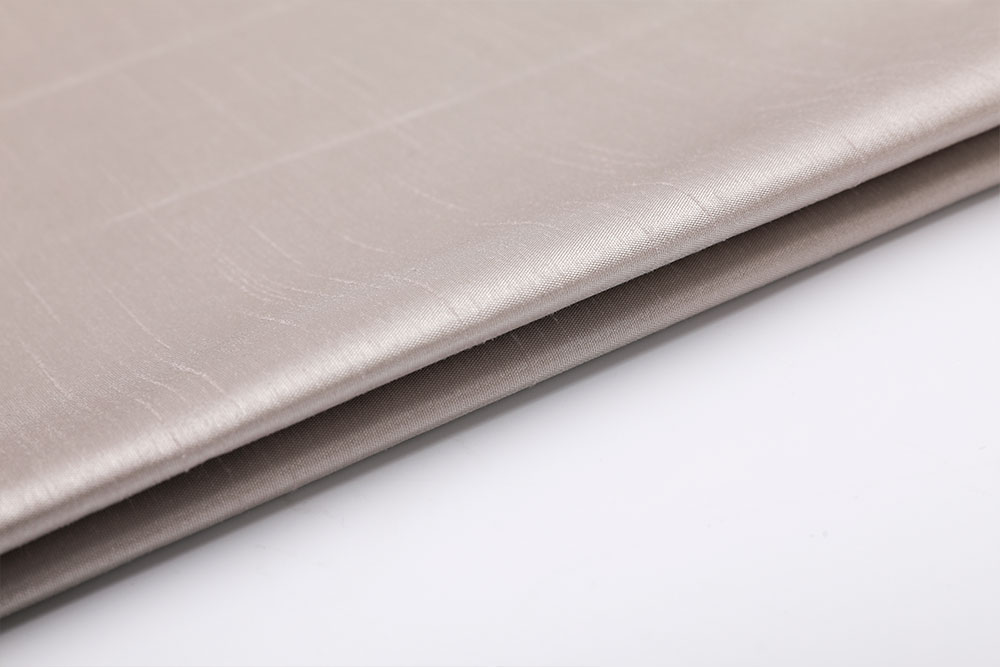
Flame retardant satin coating threads a path between the two. The coating is applied as an integrated layer rather than a surface spray, which is why it holds its oxygen index and afterflame numbers instead of drifting toward the B2 line after a few seasons of use. For procurement teams comparing options, it helps to look at a breakdown of the specific safety standards inherent flame-retardant seat cover fabrics are built to meet, since certification language varies more than the underlying chemistry does.
The satin finish also solves a problem plain FR polyester weaves can't: theaters want a fabric that reads as upholstered luxury under stage lighting, not utility-grade cloth. Understanding how flame-retardant jacquard and fireproof velour differ in seat cover applications helps explain why satin coating has become the default recommendation for front-of-house seating rather than back-of-house or rehearsal spaces.
Specification decisions in this category rarely happen on lab data alone — venue owners want to see the fabric already installed somewhere comparable. Flame retardant satin coating is now the seating fabric of choice across three flagship 2026 projects: the National Centre for the Performing Arts' Taihu Scenic Art Center, the VIP hall at Shanghai Grand Opera House, and the premiere hall at Shenzhen Opera House.
What these three venues share isn't just scale. Each operates as a flagship space where the seating fabric is visible in close-up photography, broadcast coverage, and VIP walkthroughs — meaning color consistency and surface finish carry as much weight in the decision as the fire test certificate. A fabric that satisfies B1 on paper but yellows or dulls under stage lighting within a year doesn't survive a second specification cycle at this tier.
Lab certification answers one question; a working auditorium answers another. A Grade-A theater in Beijing ran an 18-month tracking study on the fabric under real operating conditions — average daily foot traffic of 2,800 visitors, the kind of continuous friction, sitting pressure, and cleaning cycles a lab panel never sees.
After 18 months, color fastness held at grade 4–5 and flame retardant performance showed no measurable decay. That result matters more than the original test certificate for one reason: it directly answers the failure mode that topically treated fabrics are known for, where FR chemistry washes or wears off well before the fabric itself needs replacing. For venues planning a 10-15 year seating lifecycle, that durability data is the difference between a fabric that stays code-compliant and one that quietly drifts out of compliance somewhere around year three. For ongoing upkeep, general care and cleaning practices that preserve long-term flame retardancy in seat cover fabrics apply here as well.
A few checks separate a compliant purchase from a defensible one:
Flame retardant satin coated fabric has earned its place in these flagship projects by answering all four points at once — B1 compliance with margin, coated rather than topical treatment, 18 months of verified field durability, and a finish suited to front-of-house visibility. For teams comparing specification options, the full range of inherent flame-retardant seat cover fabric options is a useful starting point for matching fire performance to venue-specific finish requirements. A stage curtain project drawing on similar coated velvet construction can also reference this flame-retardant velvet fabric developed for stage curtains and theater interiors.

Copyright ? Suzhou Kylin Textile Technology Co, Ltd. Rights Reserved.
 FR Fabric Manufacturers Flame Retardant Combined Fabric Suppliers
